Zamac Caps: Why They’re Worth the Investment for Premium Brands
Materials
Zamac Caps: Why They’re Worth the Investment for Premium Brands
By LUMORA Engineering · June 5, 2026 · 6 min read
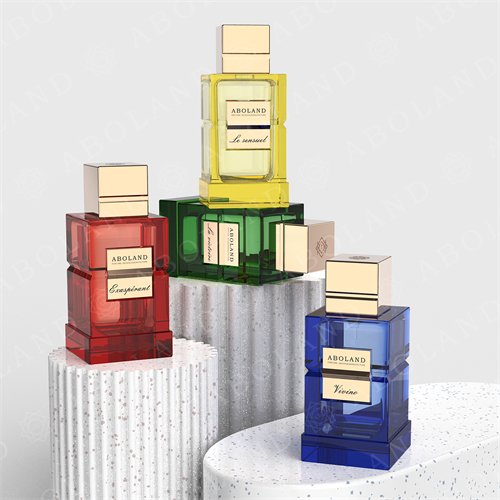
Zamac — a zinc-aluminum alloy — has been the standard cap material for premium and prestige fragrance for decades. It costs roughly 3-5x more than plastic or aluminum alternatives, and that cost difference is the most common objection we hear from brands evaluating cap materials. Here’s the case for why zamac is worth it for brands targeting the premium segment.
What Zamac Actually Is
Zamac is a family of zinc alloys with aluminum, magnesium, and copper added for strength and castability. The most common formulation for fragrance caps is Zamak 3 or Zamak 5, which cast cleanly, take plating well, and have a specific gravity of about 6.7 — substantially heavier than aluminum (2.7) or plastic (0.9-1.4).
The specific gravity is the most important property. A zamac cap on a bottle feels like a small piece of metal. An aluminum cap feels like a thin shell. A plastic cap feels like plastic. The weight difference is immediately perceptible in the hand.
The Tactile Argument
The cap is the part of the packaging the customer touches every time they use the product. Over the life of a 50ml bottle used daily, the customer will lift and replace the cap roughly 500-1,000 times. Each of those moments is a tactile brand impression.
A zamac cap with a polished or brushed finish produces a cool, smooth tactile experience that no plastic or aluminum cap can match. The cap feels substantial in the hand, operates cleanly, and produces a satisfying weight transfer when placed back on the bottle.
This tactile experience compounds. A customer who uses a fragrance daily for a year has had 500-1,000 opportunities to feel the cap. Each of those opportunities reinforces the quality perception. Over time, this perception becomes part of why the customer keeps buying.
The Mechanical Argument
Zamac is mechanically superior to plastic and aluminum for cap applications. It has high tensile strength, good impact resistance, and excellent dimensional stability over time. A zamac cap will not warp, will not crack, and will not loosen over years of use.
Plastic caps, by contrast, can warp in warm retail environments, crack under impact, and loosen as the threaded insert wears. Aluminum caps can dent easily and don’t hold threading as well over repeated use.
For a brand that wants the cap to feel as good on the 500th use as on the first, zamac is the only material that delivers.
The Brand-Positioning Argument
Beyond the tactile and mechanical arguments, zamac has a brand-positioning argument. In the fragrance category, zamac caps are associated with premium and prestige positioning. Customers — consciously or not — read a zamac cap as a signal that the product inside is premium.
This is partly self-fulfilling. Most premium and prestige brands use zamac caps. Customers have learned to associate zamac with quality. Brands that use plastic or aluminum caps in the premium segment have to overcome that learned association.
For brands entering the prestige and niche segments, zamac caps are essentially table stakes. For brands in the masstige segment, zamac caps can be a strategic choice — they lift the perceived quality of the product and justify a price point above the segment average.
The Cost Argument
A zamac cap runs $0.80-1.50 per unit in volume, compared to $0.15-0.40 for plastic and $0.40-0.70 for aluminum. The per-unit cost difference is roughly $0.40-1.10.
On a $80 retail fragrance, the cap cost difference is 0.5-1.4% of retail. On a $200 retail fragrance, it’s 0.2-0.55%. The cost is a tiny fraction of the retail price but a meaningful contributor to the perceived quality.
The cost calculation that matters is not the absolute cost — it’s the cost as a percentage of retail and the cost as a contributor to the customer’s willingness to pay. For most premium-positioned brands, the calculation favors zamac.
When Zamac Isn’t Right
Zamac isn’t always the right choice. For ultra-low-cost positioning, the cost is prohibitive. For refillable or sustainability-led positioning, zamac’s weight and material density work against the eco-narrative. For travel-size or single-use formats, the cost isn’t justified by the use case.
For these positions, plastic or aluminum is the right choice — and those materials have their own quality tiers. A polished aluminum cap with a custom finish can read as premium even if it doesn’t have the weight of zamac.
The Verdict
For brands targeting the premium, prestige, or niche segments, zamac caps are worth the investment. The tactile, mechanical, and brand-positioning arguments all favor zamac, and the cost as a percentage of retail is small enough that the ROI on quality perception is positive.
For brands in the masstige segment, zamac is a strategic consideration — it can lift perceived quality and justify higher pricing, but the calculation needs to be modeled for the specific product and price point.
For brands in the mass or value segments, plastic or aluminum is the right choice, and the focus should be on finish quality and fit precision rather than material.
Working on a fragrance project?
Zamac caps cost more than plastic or aluminum. The reasons are tactile, mechanical, and brand-positioning. Here’s the case.
Talk to Our Team